BlastMCF
Add-on
BlastLogic

Maptek Data System
Maptek Compute Framework
Maptek Orchestration Environment
Join our early access program to unlock value for your organisation.
Drill & blast management
Scheduling and haulage scenarios
Reliable proximity awareness underground
Dynamic survey surface updates
Mine planning & geological modelling
Connected geological modelling solution
Machine learning assisted domain modelling
Material tracking & reconciliation systems
Laser scanning & imaging
Point cloud processing & analysis
LiDAR-based stability & convergence monitoring
Derive value from airborne or mobile sensor data

BlastMCF Contents
Table of Contents
Related Pages
Support & Documentation
Table of Contents
Related Pages
Support & Documentation
BlastMCF is an adaptive blast design tool using search optimisation techniques inspired by natural selection to generate designs within specified engineering constraints.
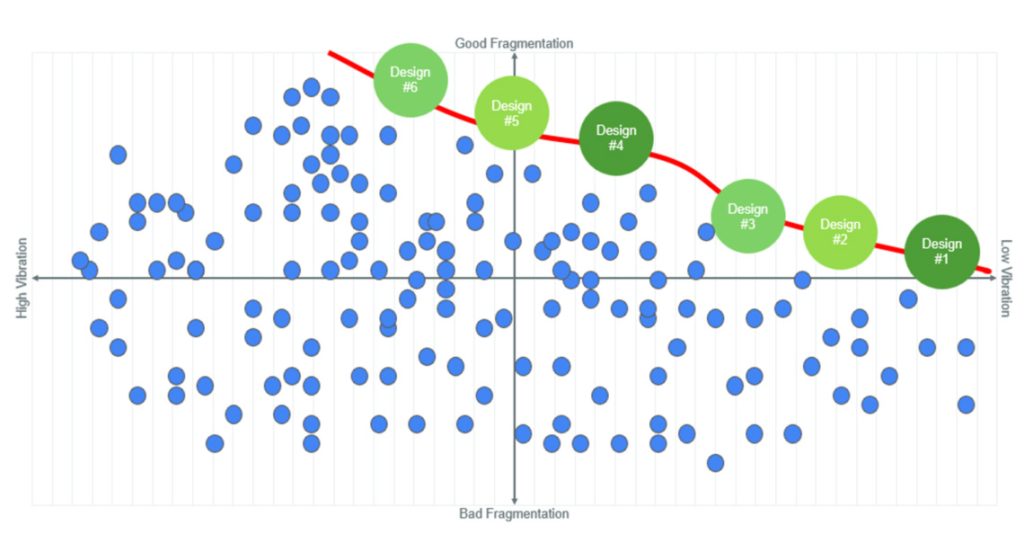
Rather than developing and testing one option at a time, engineers can explore multiple scenarios against site constraints and objectives. Trade-offs across cost, powder factor, vibration, fragmentation and fly rock become visible earlier, while engineering judgement remains central to the final decision.
Cloud processing through the Maptek Compute Framework generates design solutions on demand. Preferred scenarios move into BlastLogic for detailed refinement, communication to operations, execution and reconciliation against measured outcomes.
Blast design must balance geology, bench geometry, drilling parameters, explosives, timing, safety and downstream performance. Manually developing alternatives limits how many viable scenarios can be examined before a design must be issued.
BlastMCF generates multiple scenarios from a defined design space using polygons, surfaces and user-defined bounds. Site constraints are respected first, then solutions are evaluated against selected performance objectives.
Depending on the constraints, a run may return multiple viable options, a single compliant result, or the design with the smallest constraint violation when no option fully satisfies the defined limits. Engineers can understand trade-offs, apply operational knowledge and select the design that best balances the priorities of the bench and operation.
Outputs include drill pattern, per-hole charging and timing. Selected scenarios can be refined within BlastLogic, shared with operations and carried forward into execution and performance reconciliation.
Adaptive scenario generation - Creates viable blast designs from defined inputs, constraints and objectives
Multi-objective comparison - Shows trade-offs across competing operational and performance outcomes
Constraint-led evaluation - Respects site and design limits before assessing preferred outcomes
Complete blast design outputs - Includes drill pattern, charging and timing
Design editing tools - Adjust layouts and refine drill patterns before execution
BlastLogic performance loop - Moves selected designs into detailed refinement, execution and reconciliation
Explore more possibilities - Assess more viable scenarios before committing a design
Make evidence-led decisions - Compare cost, powder factor, vibration, fragmentation and fly rock together
Keep control of design decisions - Apply site knowledge to refine results
Adapt to each bench - Apply a repeatable method without forcing the same design response everywhere
Reduce manual work - Spend less time building options and more time reviewing them
Connect design to outcome - Progress designs through BlastLogic and alternate downstream systems for operational refinement, execution and measured reconciliation
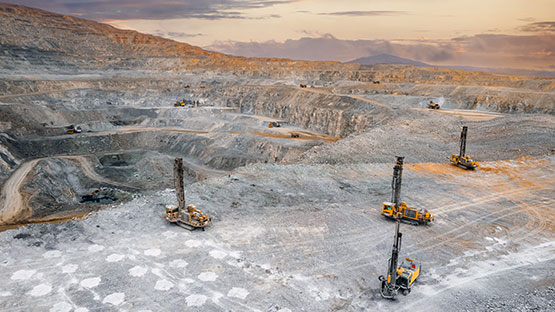
See how adaptive blast design could fit your drill and blast workflow. Talk with our team about your requirements, current process and where BlastMCF could help.
ReCAPTCHA has failed to load! Try reloading the page to submit this form. ReCAPTCHA no se ha podido cargar. Intente volver a cargar la página para enviar este formulario. Não foi possível carregar ReCAPTCHA. Tente recarregar a página para enviar este formulário. Не удалось загрузить ReCAPTCHA. Попробуйте перезагрузить страницу, чтобы отправить эту форму.
We use cookies to enhance your browsing experience and analyse our traffic. By clicking "Accept all", you consent to our use of cookies. You can customise your cookie preferences by clicking 'Customise Preferences'.
We use cookies to enhance your browsing experience and analyse our traffic.
Our website may store cookies on your computer in order to improve and customise your future visits to the website. By using cookies, we can track information about your usage of the site and improve your experience with anonymous and aggregated user data.
Review our Privacy PolicyEssential for the website's functionality, without which the site cannot operate smoothly.
Remember user preferences and choices to provide a more personalized experience.
Collect data on how users interact with the website, helping to improve user experience.
Used to deliver targeted advertisements to users based on their browsing behavior and preferences.